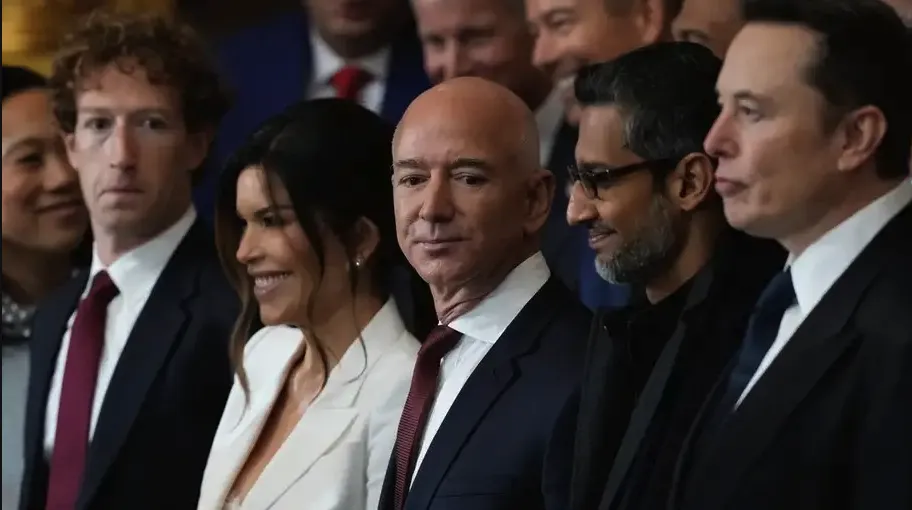
By early 2026, global wealth concentration reached a level that would have seemed implausible a decade ago. While economic growth across much of the world remained uneven and many households continued to feel pressure from inflation, interest-rate volatility, and slowing productivity, the very top of the wealth pyramid moved in the opposite direction. The ten richest individuals on the planet added hundreds of billions of dollars to their combined fortunes in a single year, widening the gap not only with the rest of society, but also within the billionaire class itself.
This article examines how much wealth the top ten gained over the past year, what drove that growth, and why the concentration of capital accelerated in 2026 rather than slowing down.
Who Makes Up the Global Top 10 in 2026
The composition of the world’s richest individuals in 2026 continues to be dominated by founders and major shareholders of technology-driven companies, alongside a small number of investors and industrial magnates. Although exact rankings fluctuate daily, the core group remains stable.
Among the most consistently represented figures are Elon Musk, Jeff Bezos, Larry Page, Sergey Brin, Larry Ellison, Mark Zuckerberg, Bernard Arnault, Jensen Huang, Warren Buffett, and Amancio Ortega.
While their industries differ, they share one defining characteristic: a large portion of their net worth is tied to equity stakes in global-scale businesses whose valuations can move dramatically within a single year.
How Much the Top 10 Gained in One Year
Aggregated estimates across public wealth trackers suggest that the combined net worth of the top ten richest individuals increased by roughly $500–600 billion over the past twelve months. Depending on market conditions and valuation methodologies, the group’s total wealth now sits in the range of $2.5–3 trillion.
To put this figure into perspective:
-
The annual gain of the top ten alone exceeds the GDP of many mid-sized economies.
-
In absolute terms, their one-year increase rivals the total market capitalization of some of the world’s largest publicly listed companies.
-
The average gain per individual within the top ten is measured not in millions or even tens of billions, but in tens of billions of dollars.
This growth was not evenly distributed. The top one or two individuals accounted for a disproportionate share of the gains, while others saw more modest increases or experienced periods of decline followed by recovery.
The Expanding Gap Within the Elite
One of the most striking features of wealth concentration in 2026 is not just the gap between billionaires and the rest of society, but the widening distance between the richest person and those ranked lower within the top ten.
At the very top, net worth levels have reached a scale where traditional comparisons no longer apply. The difference between the first and second positions alone can exceed the entire fortune of the person ranked tenth. This internal stratification means that even among billionaires, wealth is becoming more concentrated rather than more evenly distributed.
In practical terms, the top-ranked individual is increasingly operating in a financial category of their own, with the capacity to absorb volatility, fund large private ventures, and influence entire sectors without relying on public markets in the same way as others.
Technology as the Primary Engine of Wealth Growth
The dominant driver of wealth accumulation in 2026 remains technology. Companies linked to artificial intelligence, cloud infrastructure, advanced semiconductors, and digital platforms delivered outsized returns compared to most traditional sectors.
Several structural factors explain this dominance:
First, technology firms scale globally with relatively low marginal costs, allowing revenue growth to translate quickly into valuation growth. Second, investor expectations around AI-driven productivity gains pushed valuations higher, often faster than underlying revenues alone would justify. Third, founders and early shareholders tend to hold concentrated equity positions, amplifying personal wealth gains during strong market cycles.
By contrast, sectors such as manufacturing, energy, and retail—while still producing billionaires—rarely generate the same pace of wealth expansion within a single year.
Financial Markets and Asset Structure
Another critical reason for accelerated wealth concentration is the structure of billionaire assets. Unlike wage earners, whose income growth is incremental, the ultra-wealthy hold assets that reprice continuously.
When equity markets rise by 20–30 percent in a high-growth sector, that increase applies instantly to large shareholdings worth tens or hundreds of billions. This creates a compounding effect where favorable market conditions disproportionately benefit those already at the top.
In 2026, this effect was reinforced by:
-
Strong performance in AI-related equities
-
Renewed investor appetite for growth assets
-
Private market valuations that remained resilient despite higher interest rates
Why Wealth Grew Faster Than the Global Economy
Global GDP growth in 2025–2026 remained modest by historical standards, yet billionaire wealth surged. This divergence highlights a structural imbalance between capital growth and income growth.
Three mechanisms explain the gap:
-
Capital ownership is highly concentrated, so gains from asset appreciation accrue to a small group.
-
Financial markets price future expectations, not present conditions, allowing optimism around technology and innovation to inflate valuations.
-
Wealth at the top is increasingly detached from local economic conditions, as global assets are less dependent on any single country’s performance.
As a result, wealth concentration intensified even in regions where economic growth slowed.
Social and Economic Implications
The concentration of wealth at this scale has consequences beyond rankings and headlines. Economically, it raises questions about capital allocation, market power, and competition. Socially, it fuels debates around inequality, taxation, and the sustainability of current economic models.
Supporters argue that large concentrations of capital enable long-term investment in innovation, infrastructure, and high-risk projects that governments or fragmented investors might not fund. Critics counter that excessive concentration distorts markets and weakens social cohesion.
What is clear is that the trend did not reverse in 2026. Instead, it accelerated.
Conclusion
In 2026, the world’s ten richest individuals collectively gained hundreds of billions of dollars, pushing total wealth at the very top to unprecedented levels. This growth was driven primarily by technology, equity-based wealth structures, and market dynamics that reward scale and concentration.
The result is a global economy where wealth is not just unevenly distributed, but increasingly compressed at the very top. Whether this trajectory continues will depend on market cycles, regulation, and the evolution of technology itself. For now, wealth concentration remains one of the defining economic stories of the decade.