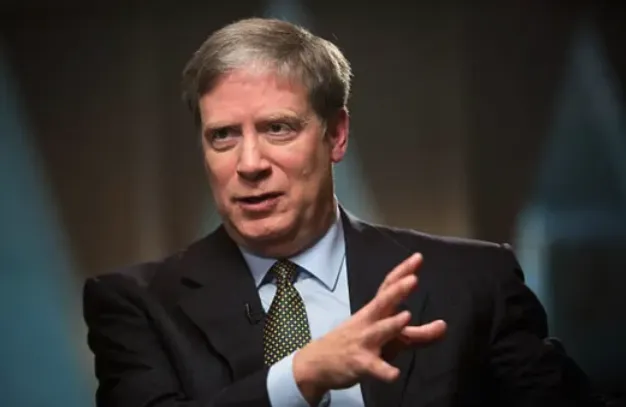
In finance, most people talk about returns. Stanley Druckenmiller talks about survival.
That difference explains almost everything about how he thinks, trades, and protects capital. While many investors build stories around long-term conviction, Druckenmiller builds systems around one uncomfortable idea: loss is information. Ignore it, and the market will remove you.
He is not famous for flashy quotes or public spectacle. He is famous because he compounded capital for decades while avoiding the kind of drawdowns that end careers. His reputation is built not on optimism, but on discipline.
This is how he really thinks about risk and loss.
Risk Is Not Volatility. Risk Is Being Wrong for Too Long.
For Druckenmiller, risk is not price movement. Volatility does not scare him. What scares him is staying in a position after the market has clearly told him he is wrong.
He has said many times that the biggest losses in his career came not from bad ideas, but from good ideas held too long. The mistake was not entering the trade. The mistake was refusing to exit.
In his framework, risk grows with time, not with noise. The longer you stay in a losing position, the more you expose yourself to second-order effects: forced selling, reduced flexibility, psychological pressure, and eventually impaired judgment.
This is why he cuts losses fast. Not because he lacks conviction, but because conviction is meaningless when price action contradicts it.
Losses Are Signals, Not Failures
Most investors treat losses as emotional events. Druckenmiller treats them as messages.
A loss tells him one of three things:
-
the timing is wrong
-
the thesis is incomplete
-
the market environment has changed
None of these are moral failures. They are feedback.
He does not argue with the signal. He does not reinterpret it to protect his ego. He exits, reassesses, and waits. Sometimes he re-enters later at a better level. Sometimes he abandons the idea entirely.
This approach removes shame from losing. Losing is not the problem. Ignoring loss is the problem.
He Hates Drawdowns More Than Missed Gains
One of Druckenmiller’s most revealing traits is his extreme discomfort with large drawdowns. He would rather miss upside than tolerate deep downside.
This puts him at odds with popular investment narratives that glorify “holding through pain.” Druckenmiller believes that pain dulls decision-making. Once you are deep in a drawdown, you stop thinking clearly. You start defending positions instead of evaluating them.
His rule is simple: if a position is causing mental stress, it is already too big.
This is why his position sizing is dynamic. When things go right, he presses. When they go wrong, he reduces exposure quickly. The goal is asymmetric: small losses, large wins.
Liquidity Is a Hidden Form of Risk
Another underappreciated aspect of Druckenmiller’s thinking is his obsession with liquidity.
He avoids positions that cannot be exited quickly. Not because they are inherently bad, but because illiquidity turns mistakes into disasters. A bad thesis in a liquid market can be corrected. A bad thesis in an illiquid market becomes a trap.
This is especially relevant in modern markets, where leverage and speed amplify outcomes. Druckenmiller understands that the ability to change your mind is itself a form of capital.
If you cannot exit, you do not control risk. The market controls you.
Confidence Is Dangerous When It Becomes Narrative
Druckenmiller is deeply skeptical of beautiful stories. He distrusts trades that require long explanations.
If an idea cannot be expressed simply and confirmed by market behavior, he reduces exposure. Complexity often masks fragility. When conditions change, complex theses break faster.
He has warned repeatedly that investors get into trouble when they fall in love with narratives. Narratives create emotional attachment. Emotional attachment delays exits.
For him, the market does not care how compelling your story is. Price action is the only arbiter.
The Biggest Risk Is Ego
Perhaps the most important part of Druckenmiller’s philosophy is psychological.
He believes ego is the root of catastrophic loss. The need to be right. The refusal to admit error. The desire to defend reputation rather than capital.
He actively designs his process to minimize ego involvement:
-
predefined exit rules
-
constant position reviews
-
willingness to reverse positions quickly
He has openly said that some of his best trades came from admitting he was wrong and flipping his view entirely.
In his world, flexibility beats consistency. Survival beats pride.
Why He Rarely Holds Positions for Decades
Unlike traditional long-term investors, Druckenmiller does not believe time automatically reduces risk. Time can amplify it.
Structural shifts, policy changes, and regime breaks happen faster than most investors expect. What worked for ten years can stop working overnight.
This does not mean he trades constantly. It means he stays mentally short-term, even when positions last longer. Every position is guilty until proven innocent, every day.
He does not marry assets. He dates them.
Risk Management Is His Edge
Many people try to copy Druckenmiller’s trades. Very few try to copy his risk discipline.
His real edge is not market prediction. It is loss containment. By keeping losses small, he ensures that when he is right, the gains matter. By staying liquid and flexible, he ensures he is always alive for the next opportunity.
This is why he survived multiple market cycles while others disappeared.
What Most Readers Miss About His Success
The public often attributes his success to intelligence or macro insight. Those matter, but they are not decisive.
What sets him apart is his intolerance for uncontrolled risk.
He does not seek certainty. He seeks optionality.
He does not seek comfort. He seeks clarity.
He does not seek to avoid losses. He seeks to avoid ruin.
Final Thought
Stanley Druckenmiller’s attitude toward risk and loss is deeply unromantic. There is no heroism in suffering. No virtue in stubbornness. No reward for being early and wrong.
There is only discipline.
Losses are not the enemy. Ego is.
Volatility is not the threat. Inflexibility is.
Risk is not uncertainty. Risk is staying when the market tells you to leave.
That mindset, more than any single trade, is why he is still here — and why most are not.