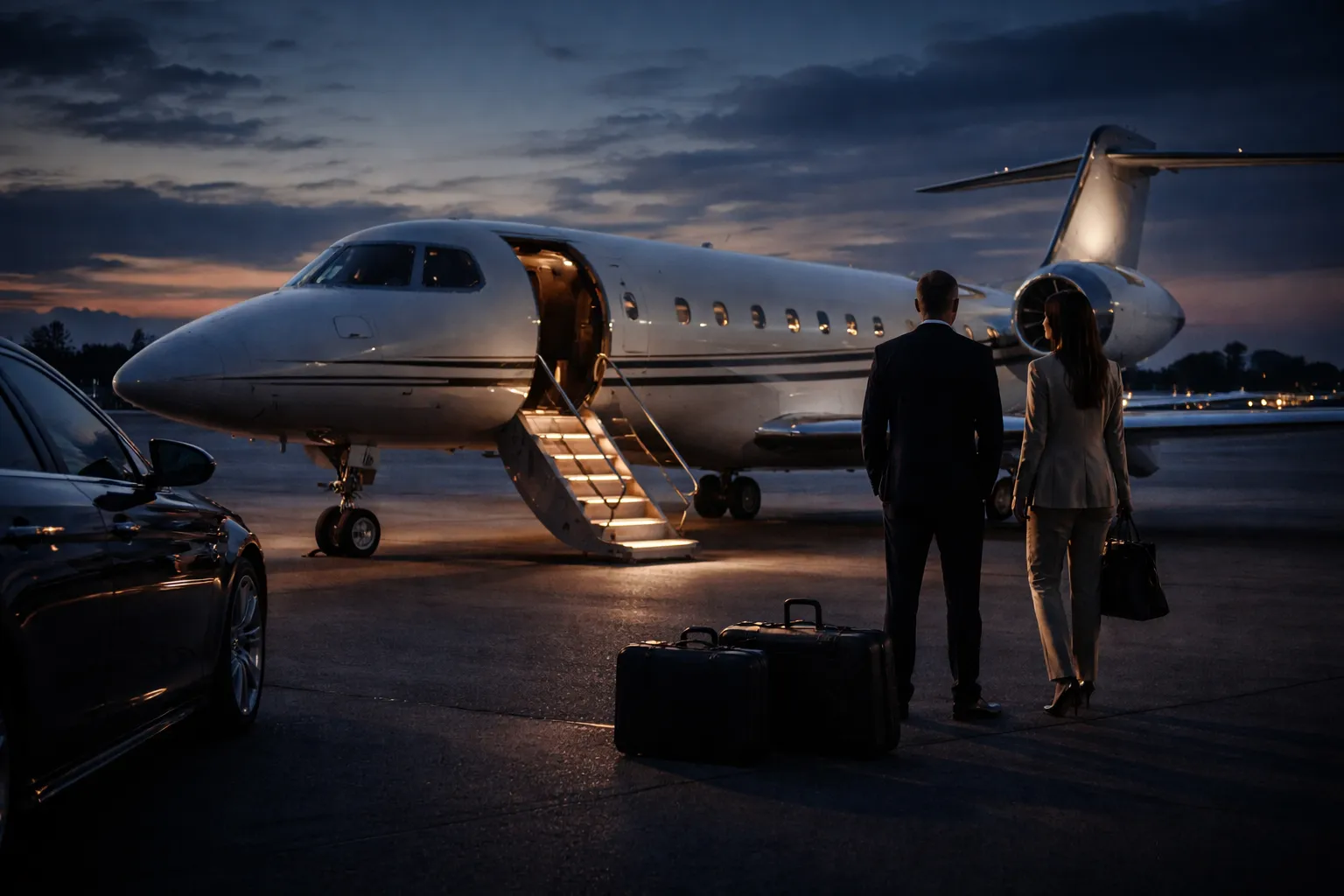
Why private aviation has become a tool for managing time, risk and privacy
At first glance, the renewed surge in private jet travel at the start of 2026 looks familiar. Private aviation has always been associated with luxury, speed and status. But the data emerging this January suggests something different is driving demand.
According to WingX, private aviation activity opened 2026 up 9% year over year, marking one of the strongest starts in recent years. What stands out is not who is flying, but why.
This is not a story about indulgence.
It is a story about control.
What the data actually shows
Private jet usage is rising across multiple categories:
-
business jets
-
long-range intercontinental flights
-
short, highly targeted regional trips
Crucially, the growth is not limited to peak leisure periods. Utilization is increasing on weekdays, outside traditional vacation windows, and for trips that would once have been handled commercially.
That pattern matters.
It suggests private aviation is being used less as an upgrade in comfort and more as a substitute for unpredictability in commercial travel.
Why speed is no longer the primary factor
Private jets have never been dramatically faster door-to-door than first-class commercial flights on major routes. That has not changed.
What has changed is the cost of uncertainty.
Commercial travel in 2026 carries variables that high-net-worth individuals increasingly view as unacceptable:
-
irregular schedules
-
last-minute cancellations
-
security delays
-
routing changes
-
exposure to crowds and visibility
For people whose time is measured in decision windows rather than hours, these variables introduce friction that cannot be optimized away.
Private aviation removes those variables entirely.
Control has become the real luxury
The modern private jet buyer is not purchasing speed. They are purchasing:
-
control over departure time
-
control over routing
-
control over passenger environment
-
control over exposure and privacy
In practical terms, this means:
-
flights scheduled around meetings, not timetables
-
ability to depart within minutes, not hours
-
direct access to secondary and tertiary airports
-
no need to interface with public terminals
This level of control cannot be replicated in commercial aviation, regardless of price.
Time efficiency beats cost efficiency
From a purely financial perspective, private aviation is difficult to justify. The cost per hour far exceeds any commercial alternative.
But that comparison misses the point.
For ultra-high-net-worth individuals, the relevant metric is not cost per seat — it is cost per interruption avoided.
Missed meetings, delayed negotiations, lost momentum and decision fatigue all carry opportunity costs that dwarf the price of a chartered flight.
Private aviation reduces those risks to near zero.
Privacy is now a primary driver
Another factor behind the surge is privacy, which has become harder to maintain in public spaces.
High-profile individuals increasingly view commercial airports as environments of:
-
unwanted visibility
-
data exposure
-
security uncertainty
Private aviation offers:
-
controlled access
-
known passenger lists
-
discreet arrivals and departures
-
reduced digital and physical traceability
In 2026, privacy is no longer an aesthetic preference.
It is a risk management strategy.
Why shorter trips are driving growth
One of the most telling trends in the data is the rise of short, purpose-driven flights.
Rather than extended vacations, private aviation is increasingly used for:
-
24- to 72-hour trips
-
single-purpose travel (one meeting, one site visit)
-
rapid repositioning between cities
These trips are not about relaxation.
They are about maintaining continuity.
Private jets allow executives, founders and owners to compress complex schedules without sacrificing presence or decision quality.
The lifestyle shift behind the numbers
This surge reflects a broader lifestyle shift among wealthy individuals:
-
Less tolerance for friction
-
Less patience for inefficiency
-
Greater emphasis on predictability
-
Stronger preference for environments that can be controlled end-to-end
In this context, private aviation sits alongside:
-
private healthcare
-
gated residences
-
controlled digital footprints
-
delegated personal operations
It is not a splurge.
It is part of a controlled living system.
Why this trend is likely to persist
Unlike pandemic-driven spikes in private travel, the 2026 surge is rooted in structural behavior, not temporary disruption.
Three forces support its durability:
-
Persistent commercial travel volatility
-
Rising value of executive time
-
Growing emphasis on privacy and security
As long as these factors remain, private aviation will continue to function as an operational tool, not a luxury accessory.
What this says about modern luxury
Traditional luxury emphasized visibility: where you stayed, what you wore, how you traveled.
Modern luxury emphasizes invisibility and control.
The ability to move without friction, without delay and without exposure has become a defining marker of wealth — even if it is never seen.
Private jet travel fits that model perfectly.
The quiet conclusion
The rise in private jet travel in 2026 is not about excess.
It is about eliminating variables.
For the wealthiest travelers, time is no longer something to optimize. It is something to protect.
And protection, increasingly, is what luxury is really about.